
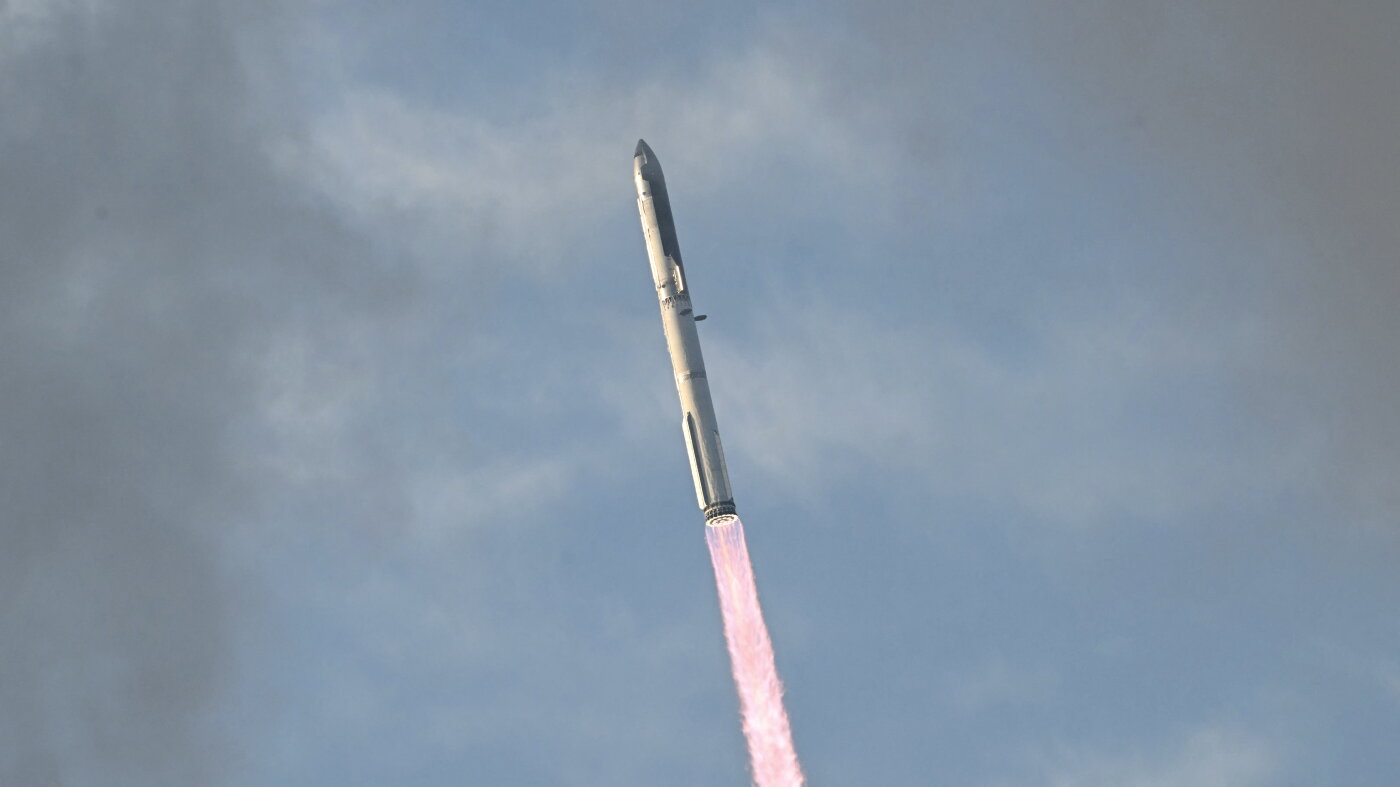
The 171-foot-tall vehicle's Super Heavy booster ignited all 33 of its rocket engines for the 14th test flight of the uncrewed Starship program. Two and a half minutes after launch, Starship separated from the booster and kept climbing into space.
One of Starship's six engines failed during ascent, forcing SpaceX teams to decide whether to push on toward orbit or cut the flight short. They gave the go-ahead about 22 minutes in, and Starship reached orbit for the first time in program history.
Starship sits at the center of SpaceX's commercial ambitions and NASA's plans to put astronauts back on the moon. Reaching orbit marks a real step forward after 13 previous flights that never got there. It matters for anyone tracking how soon the vehicle could carry crew or cargo on deep space missions.
Super Heavy is built to be reusable, designed to fly back to its launch site and get caught by the launch tower rather than land the way traditional rockets do.