
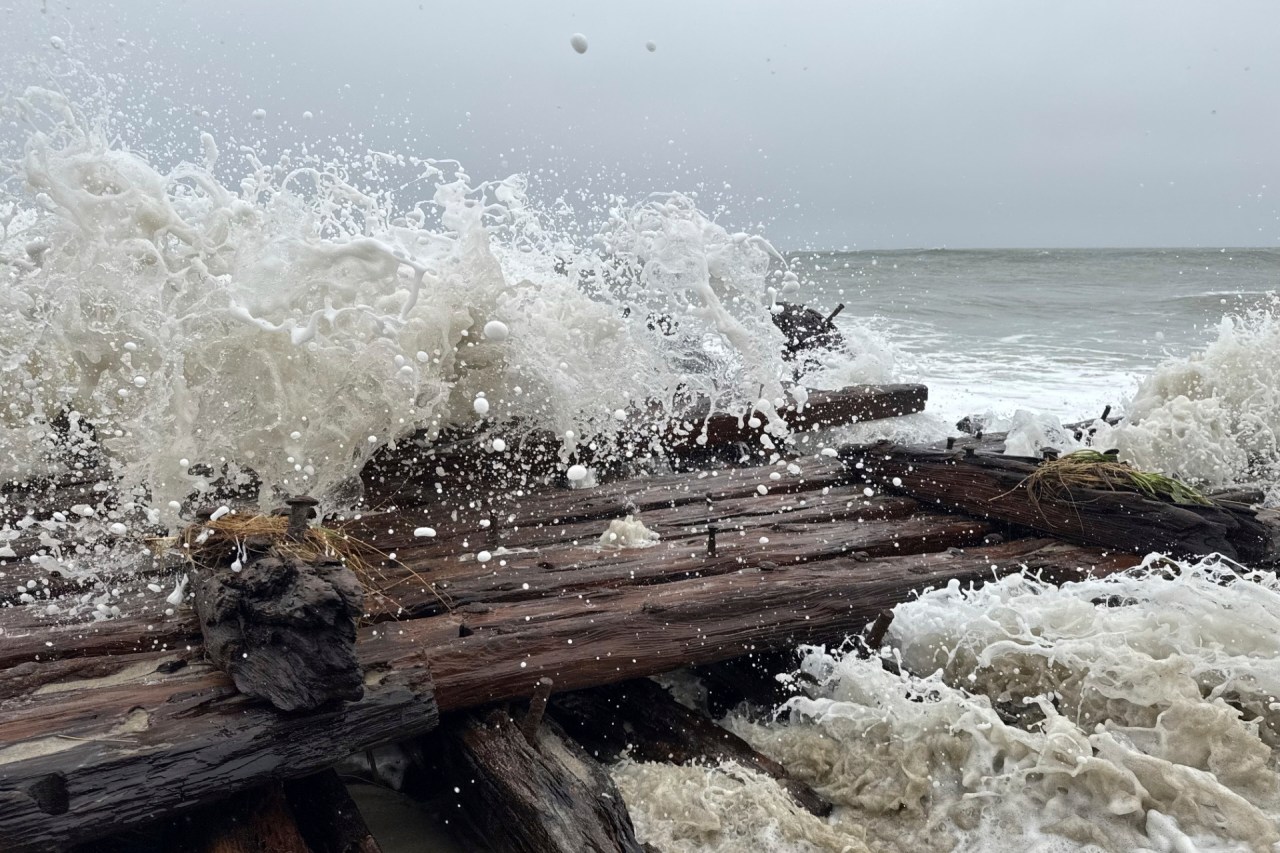
The Egan Maritime Institute said its exhibits and collections manager planned to visit the beach Monday to inspect the timbers. The wood is fastened together with rusted iron. The site sits near an area where remains believed to be from the Warren Sawyer, a wooden schooner lost in 1884, have turned up before.
The institute's manager will send a report to state underwater archaeologists. From there, the state team and the institute will work together to figure out exactly which vessel the wreckage belongs to.
For an island with centuries of maritime history sitting under its beaches, storms like this one act as an accidental excavation crew. Nor'easters can strip away sand fast enough to pull wreckage that has sat buried for generations back into view, giving researchers a rare shot at pinning down details on ships lost long before anyone alive today was born.
Nobody's confirmed yet whether these particular beams belonged to the Warren Sawyer or some other wreck entirely. Either way, a storm violent enough to reshape a beach also just handed historians a puzzle that's been waiting more than 140 years to get solved.