
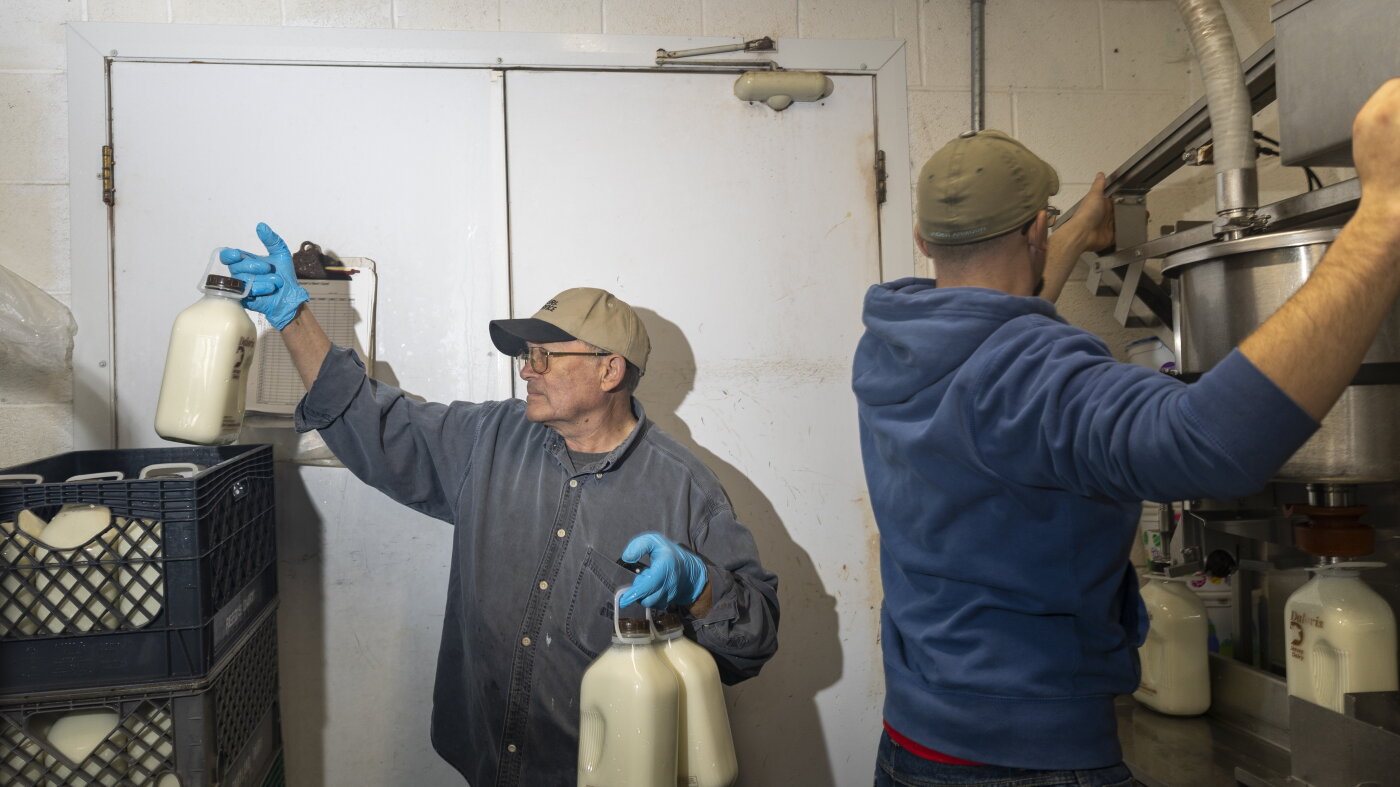
Twin Falls sits in a fertile river plain that's become a national agricultural powerhouse, driven largely by Idaho's multi-billion-dollar dairy industry. Farmers there acknowledge what's become an open secret even in the deeply Republican state, that the industry runs on labor from workers without legal status.
So far, ICE sweeps sending shockwaves through immigrant communities elsewhere in the country have largely bypassed farms. But that's cold comfort for dairymen watching the crackdown intensify. Farmers already struggle to find enough workers willing to do the physically demanding, round-the-clock labor that dairy operations require, and any disruption to their current workforce could deepen that shortage fast.
For an industry that props up the regional economy, the stakes go beyond politics. Losing workers means losing production, and losing production means real money for an industry that's spent decades building Twin Falls into an agricultural heavyweight. Farmers who've quietly relied on this labor pool for years now find themselves in an uncomfortable spot, hoping enforcement stays elsewhere while knowing it might not.
It's a strange kind of limbo, an industry that depends on workers few politicians will publicly defend, hoping the spotlight never turns its way.