
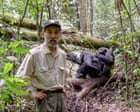
Mitani, now 72, first walked into Kibale in the summer of 1995. He had just left Tanzania's Mahale mountains, then home to the largest known chimp population at about 100 individuals. Rumours said this part of Kibale, reachable only by a 12-hour drive from Kampala, might hold even more.
"It only took a few days to realise that something weird was going on at this place," Mitani says. "There were chimps everywhere." As a University of Michigan professor, he and colleagues eventually counted nearly 200 chimpanzees living together peacefully in Ngogo, a 1970s research area for studying red colobus monkeys. No one in primatology had seen a troop that large.
Later that year, Mitani and Yale primatologist David Watts co-founded the Ngogo Chimpanzee Project with a $500,000 award from the US National Science Foundation. Three decades on, it is one of just 12 long-term studies of wild chimpanzees worldwide.
Progress came slowly. The chimps were not used to people and ran whenever researchers approached, so days meant chasing them over hills and down valleys. Trust took years. Then things took a dark turn, and what Mitani found stunned the scientific world. He did not want to write about it.
Mitani is the man who watched that peace break apart.