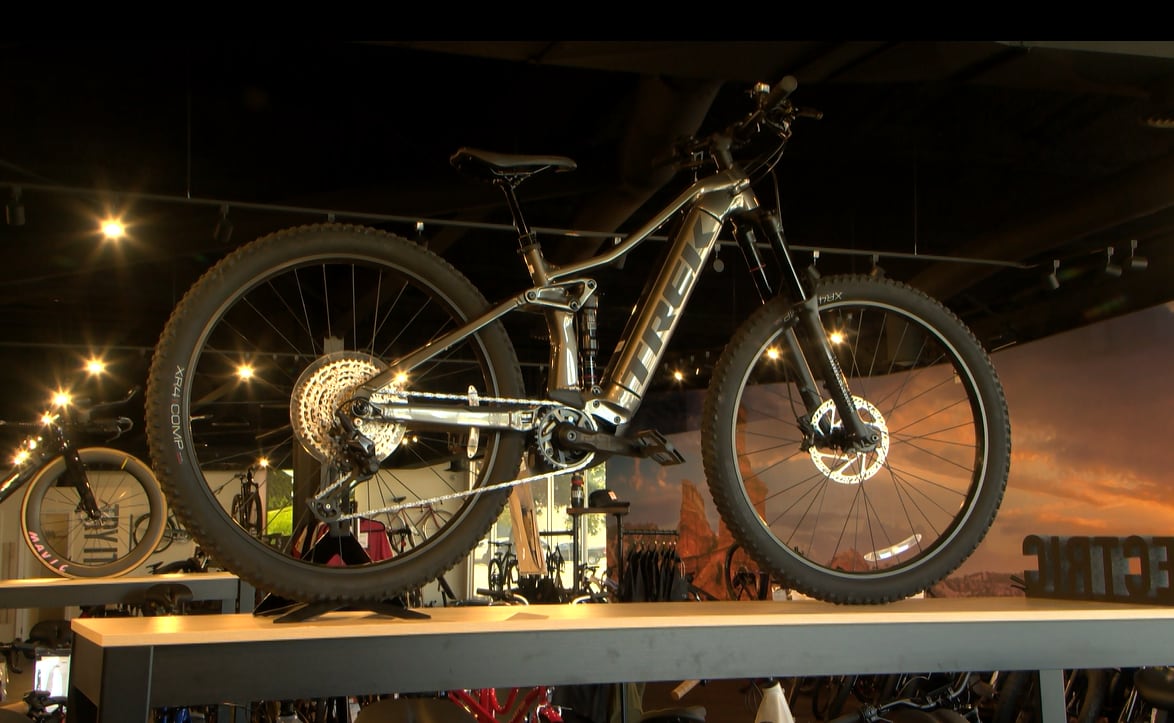
Electric bikes now make up 40 percent of sales at Hills Sports Shop in Amarillo, and bike shops and online retailers report a major spike heading into the holidays.
Caden Graff, front of house manager at Hills, says e-bikes come in classes. Class 1 is pedal assist up to 20 miles an hour. Class 2 is pedal assist up to 28 with a throttle up to 20. Class 3 is pedal assist only, up to 28. An unofficial Class 4, the e-moto, has only a throttle, no pedals and motorcycle speeds.
Most states and localities bar riders under 16 from Class 3 bikes. Confusion over the types means many police departments don't actively enforce the rules.
Prices run from $300 for a basic model to $15,000 for a top racing bike, and bikes at Hills run about $2,000 to $4,000. Graff warns that cheaper models come with a host of issues. The payoff is faster commutes and less sweat. The tradeoff is new safety concerns on roads and trails, and young people who want a little more zip are the ones leaning in hardest.
Asked how fast an e-moto can go, Graff says it's sky's the limit.
Common questions
What are the different classes of e-bikes?
- There are three official e-bike classes. Class 1 is pedal assist up to 20 miles an hour. Class 2 is pedal assist up to 28 with a throttle that works up to 20. Class 3 is pedal assist only, up to 28. An unofficial Class 4, the e-moto, has only a throttle, no pedals and motorcycle speeds.
How much does an e-bike cost?
- Prices run from $300 for a basic model to $15,000 for a top racing bike. Bikes at Hills Sports Shop in Amarillo run about $2,000 to $4,000. Electric bikes now make up 40 percent of sales at Hills, and shops and online retailers report a major spike heading into the holidays.
Can riders under 16 use a Class 3 e-bike?
- Most states and localities bar riders under 16 from Class 3 bikes. Those bikes are pedal assist only and go up to 28 miles an hour. Confusion over the types means many police departments don't actively enforce the rules, so check local rules before buying for a teenager.