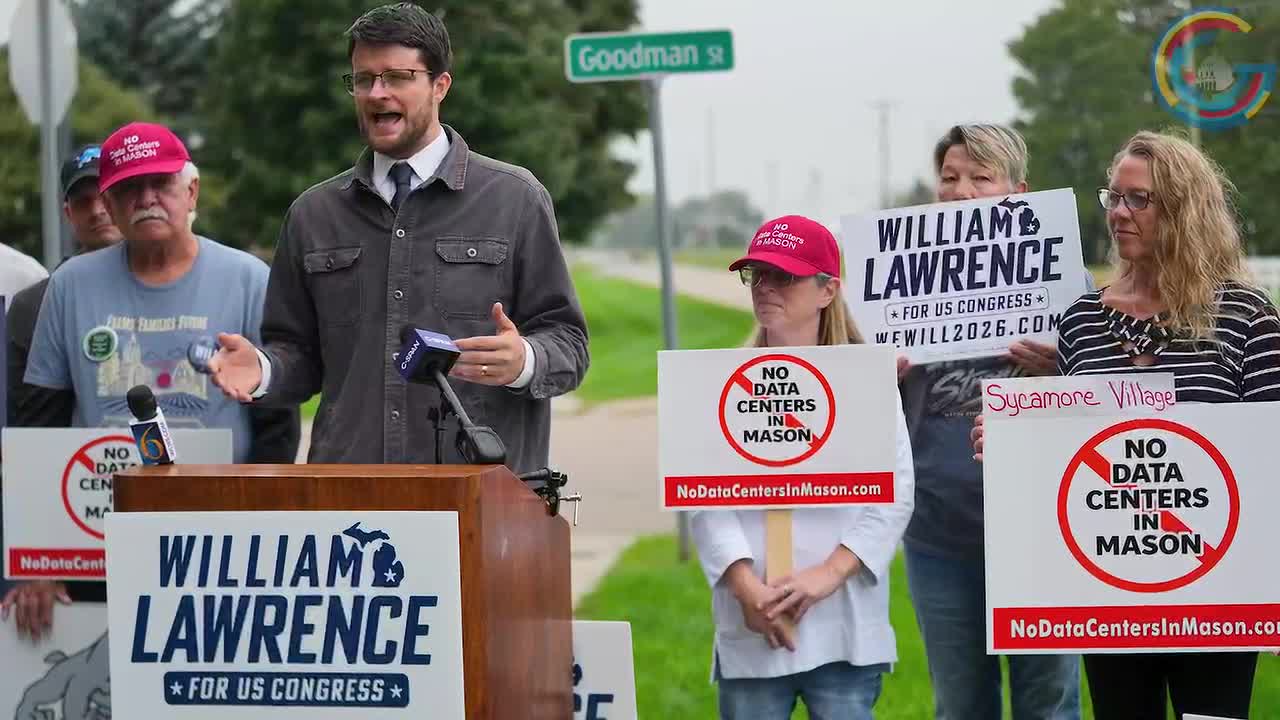
Artificial intelligence has become a major issue in several midterm races over the last few months, according to Chris Borick, a political science professor at Lehigh University.
Candidates are making their final pitches to voters. Borick said the political calculus has gone from positive to negative in both red and blue states after public backlash. He tied the shift to wider worries about AI's effect on society, the economy and local communities.
"We like tech traditionally as part of our political economy," Borick said. "That's really changed in the last year, where you see a much more neutral and sometimes negative political position on AI."
Both parties have tapped into those worries, though they talk about them differently. Shobita Parthasarathy, a public policy professor at the University of Michigan, said Republicans have been in a much closer position with AI companies over the last year or more. She said that leads them to focus on cost, steer away from broader issues and talk less about a moratorium.
For voters, the concern doesn't stay in one camp. Borick said that at the local level, conservatives, liberals, Republicans and Democrats often align in opposition to data centers or express concerns about AI.
Common questions
Is AI a big issue in the midterm elections?
- Yes. AI has become a major issue in several midterm races over the last few months, according to Chris Borick, a political science professor at Lehigh University. Candidates are making their final pitches to voters, and the political shift has played out in both red and blue states.
How has the politics of AI changed?
- The political calculus around AI has gone from positive to negative in both red and blue states after public backlash, according to Borick. He tied the shift to wider worries about AI's effect on society, the economy and local communities. Tech was traditionally welcomed, but views are now more neutral and sometimes negative.
Why are voters worried about AI?
- Voters' worries center on AI's effect on society, the economy and local communities, according to Borick. He said the public backlash has pushed the politics from positive to negative. Both parties have tapped into those worries, though they talk about them differently.