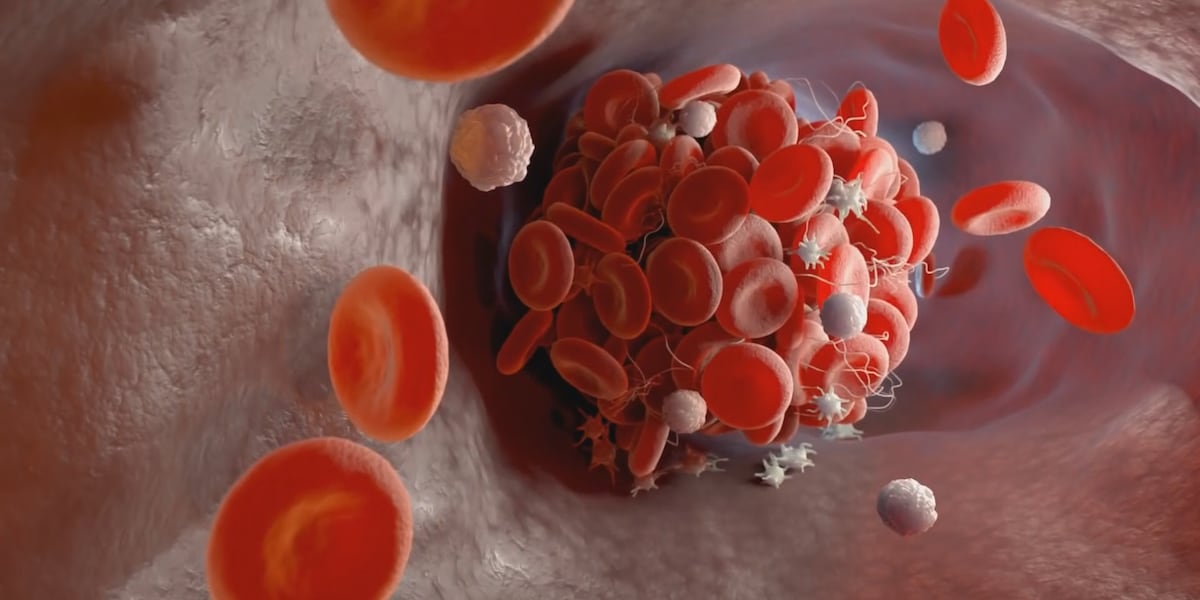
Dr. Victor Test, a pulmonology and internal medicine specialist, says blood clots, which affect roughly 900,000 Americans every year, are very treatable when doctors catch them early.
A blood clot forms when blood clumps inside a vein, according to the National Blood Clot Alliance. A clot in the leg or lower extremities is called deep vein thrombosis. If it travels to the lungs, it becomes a pulmonary embolism.
Test says the effects depend on where the clot sits. In an arm or leg, the limb swells and often hurts. When a clot breaks off and reaches the lung, it blocks blood flowing from the heart to the lung, where the body collects oxygen.
Clots that go undetected can be deadly. Blood thinners have proven very successful at making the clot resolve, and Test said the risk of a complication "goes down significantly with every day that you're on treatment." Patients should stay mobile and active during recovery, but blood thinners raise the risk of bleeding. Test said he does not typically recommend rock climbing or jumping out of airplanes, and he would also advise against football, wrestling or other high-risk contact sports.
The warning sign Test points to is simple: one limb swollen and the other not.
Common questions
What is a blood clot?
- A blood clot forms when blood clumps inside a vein, according to the National Blood Clot Alliance. A clot in the leg or lower extremities is called deep vein thrombosis. If it travels to the lungs, it becomes a pulmonary embolism. Roughly 900,000 Americans get blood clots every year.
What does a blood clot do to your body?
- The effects depend on where the clot sits, according to Dr. Victor Test. In an arm or leg, the limb swells and often hurts. If a clot breaks off and reaches the lung, it blocks blood flowing from the heart to the lung, where the body collects oxygen.
Can blood clots be treated?
- Yes, blood clots are very treatable when doctors catch them early, says pulmonology and internal medicine specialist Dr. Victor Test. Blood thinners have proven very successful at making the clot resolve. Clots that go undetected can be deadly, which is why catching one early matters.