
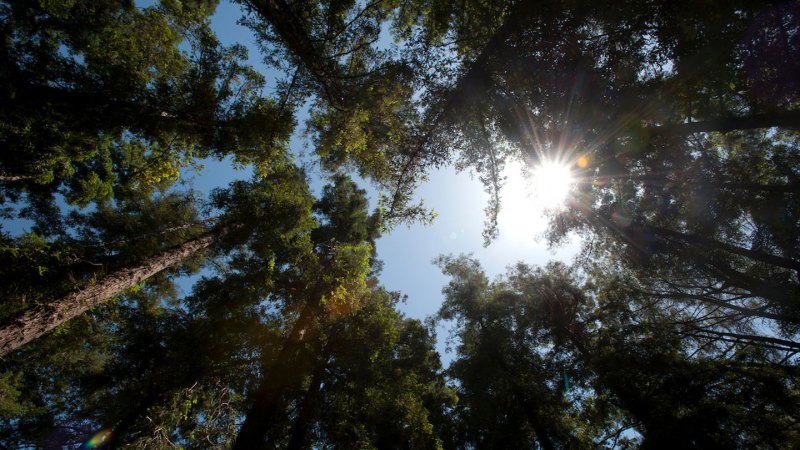
Towering coast redwoods survive fire, fungus and rot for centuries. Heat waves are a newer problem. These trees live only in a narrow strip of coastal habitat from central California to southern Oregon, where temperatures stay mild and fog is abundant. Recent heat waves have pushed temperatures in parts of that range past 40 degrees Celsius.
From July 2022 to October 2024, Lily Klinek, Troy Magney and colleagues repeatedly measured needles from redwoods in Mendocino County, a stretch that included two heat waves. Under extreme heat, the needles ran up to 10 degrees Celsius hotter than the surrounding air because the dark needles absorb ample sunlight. That suggests the stomata, tiny pores that let water evaporate and cool a tree much like sweat cools people, had at least partially closed.
Klinek, an ecophysiologist at the University of California, Davis, says a drop like this usually signals "severe levels of stress." That stress can kill trees, which may jeopardize one of California's largest stores of carbon, a shield against climate change.
Researchers have studied heat waves in other trees, but Magney, an ecophysiologist at the University of Montana in Missoula, says this is the first look at redwoods.