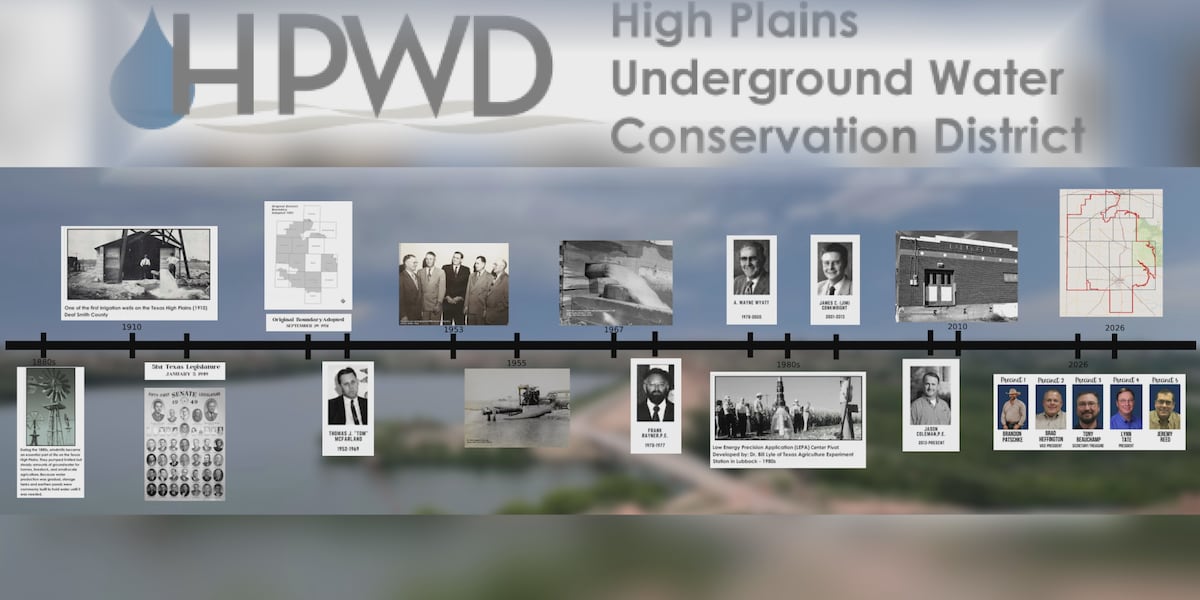
The High Plains Underground Water Conservation District is celebrating 75 years as the first and largest agency of its kind in Texas.
People on the High Plains have pumped groundwater since the 1880s for homes, livestock and agriculture. The district says one of the first irrigation wells in the area went in during 1910. In 1949, state legislators created underground water conservation districts through the Texas Groundwater Act, and two years later, residents from 13 Southern High Plains counties voted to start their own.
Manager Jason Coleman sums up the mission as "conservation, preservation, protection, recharge, and prevention of waste of underground water resources." Water from the Ogallala Aquifer and better irrigation technology helped agriculture grow here. Pivots cut some of the labor, but heat and wind in West Texas meant not all of that water reached the crop.
Farming has changed because the water has. "There just simply isn't the same water available as there was years ago," Coleman said. Most irrigated producers are shrinking their irrigated acreage to match what the ground can supply.
Everyone else has a stake too. The average homeowner with a $200,000 house pays less than $10 a year to fund the district, and that payment comes with a vote on who sits on its board.
Common questions
How long has the High Plains water district been around?
- The district is celebrating 75 years as the first and largest agency of its kind in Texas. State legislators created underground water conservation districts through the Texas Groundwater Act in 1949, and two years later, residents from 13 Southern High Plains counties voted to start their own.
What does the High Plains Underground Water Conservation District do?
- The district's mission is "conservation, preservation, protection, recharge, and prevention of waste of underground water resources," according to manager Jason Coleman. In other words, it works to protect the groundwater that people on the High Plains have pumped since the 1880s for homes, livestock and agriculture.
When did irrigation wells start on the High Plains?
- The district says one of the first irrigation wells in the area went in during 1910. People on the High Plains had pumped groundwater since the 1880s for homes, livestock and agriculture. Water from the Ogallala Aquifer and better irrigation technology later helped agriculture grow in the region.