
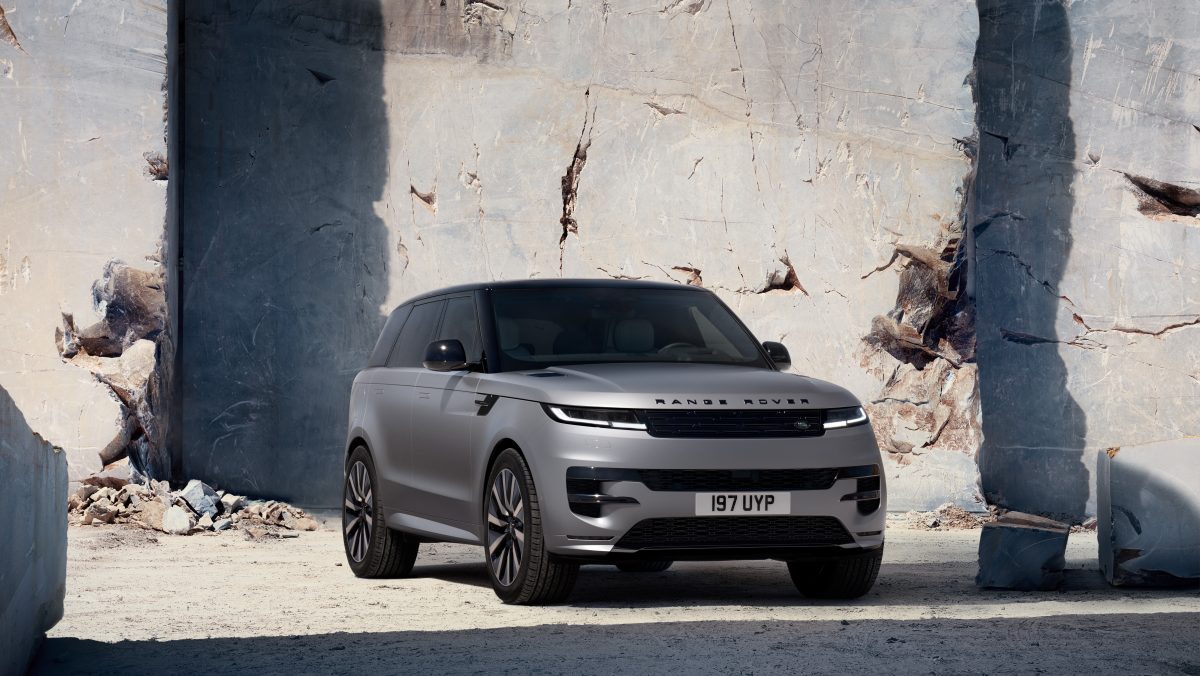
The powertrain makes up to 550 metric horsepower, roughly 542 hp, and 850 Nm of torque, about 627 pound-feet. Range Rover says that is more torque than any earlier Sport. With Dynamic Launch Mode on, the company claims 0 to 60 mph in as little as 4.3 seconds, the same published pace as the V8-powered P540 Sport.
Batteries are heavy, and a heavy luxury SUV can feel it in the corners. Range Rover says it used battery placement and vehicle structure to deal with that. The body is 61 percent stiffer than the plug-in hybrid Sport, and the center of gravity sits 73 mm lower.
The chassis adds Adaptive Dynamics, Twin Valve Dampers, Dynamic Air Suspension and electronic Active Roll Control. That last system can apply up to 1,400 Nm of force across each axle. Adaptive Dynamics checks 100 vehicle parameters 500 times every second.
For drivers eyeing a big luxury SUV, the pitch is simple. You give up the engine and keep the speed. Straight-line acceleration has become routine among expensive EVs, so the real test is how the thing handles. A lower center of gravity can cut the leaning that tall vehicles do through a corner.