
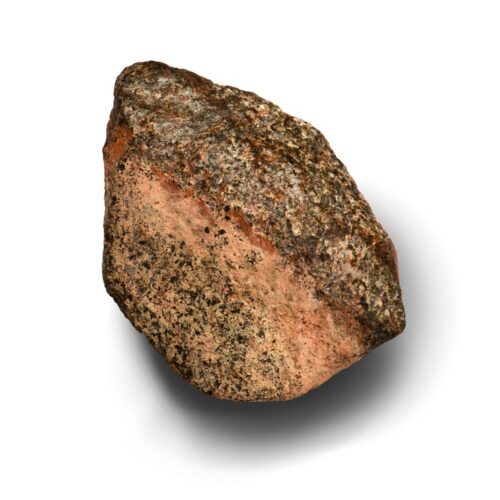
Crater counts say most of the Martian surface is more than 3 billion years old. The meteorites on Earth disagree. The three main classes, shergottites, nakhlites and chassignites, are all 2.4 billion years old or younger.
Until now, scientists knew of only two genuinely ancient Martian meteorites. Allan Hills 84001 turned up in Antarctica, and a jumbled rock from northwest Africa picked up the nickname Black Beauty. Teghaza 001 makes three. "It's very old and similar to some of the oldest rocks on Earth," Liu says.
The scarcity comes down to how a rock leaves Mars. A large impact has to throw it into space, and weak rocks don't survive that. "If the impact hits into loose powder, it may not get cemented to become a rock and fly off Mars' gravity," Liu said. "So the natural impact already acts as a filter." That leaves scientists with a biased collection. Black Beauty's bulk chemistry matches orbital measurements, but it mixes soil with many small rock fragments. Teghaza 001 is a single, intact igneous rock.