
Cathie once lived in Richmond, Virginia, and worked in a technical field. June noticed the first signs in 2019, starting with forgetfulness and then repeated tasks. Cognitive testing confirmed their fears, and doctors diagnosed Cathie at age 58. Early-onset Alzheimer's is a rare form of dementia that can affect people in their 40s and 50s.
Five years after the diagnosis, June, now in her late 80s, became her daughter's full-time caregiver. On the day of the interview, Cathie was painting a bottle purple, the color of Alzheimer's awareness.
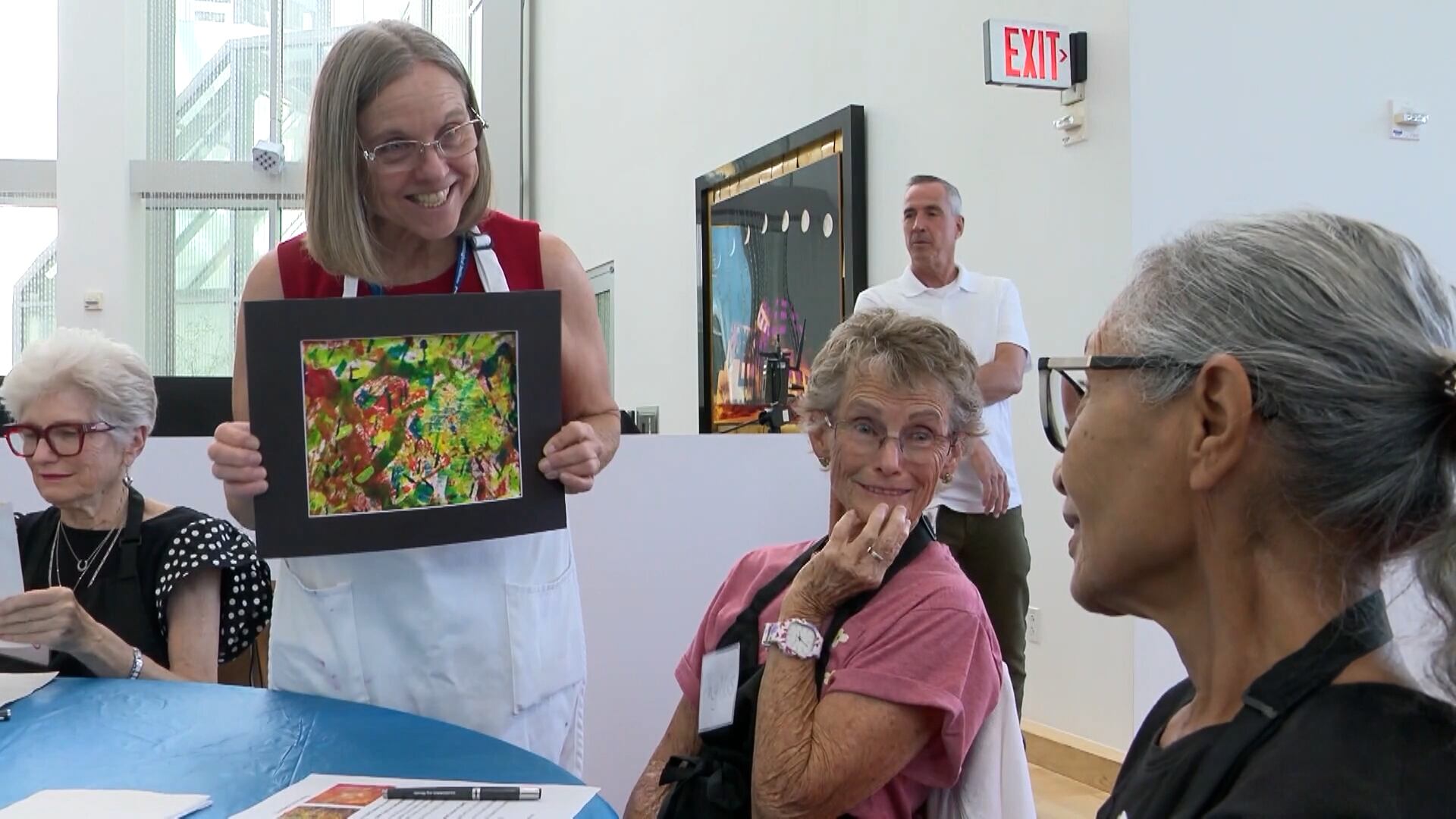
Art therapist Elizabeth Gronke says the point is connection. Families can be together without talking directly about the disease, which is often the hardest part. Art therapy means creative expression with purpose, including painting, sculpting and drawing. It gives people a way to communicate when words stop working.
Research published by the National Library of Medicine shows drawing and painting can sometimes stimulate memories in people with dementia and other neurological diseases. Researchers have also found creative activities engage multiple areas of the brain. For some patients, that means more focus, less anxiety and more engagement.
June says caregiving brought her daughter back into her life "in some fashion, not necessarily as we planned."